International energy trade connects producers, suppliers, traders, logistics providers, and industrial buyers across global markets. From petroleum products and bitumen to liquefied petroleum gas (LPG) and petrochemicals, successful international trading requires more than finding a competitive price. Buyers must evaluate suppliers, understand product specifications, assess commercial terms, and plan transportation from origin to destination.
For businesses operating across borders, understanding how commodity trading, global sourcing, and logistics work together is an important step toward making informed purchasing decisions.

1. What Is International Energy Trade?
International energy trade involves the cross-border buying and selling of energy commodities and related industrial products. These transactions may involve producers, refineries, trading companies, distributors, importers, and end users.
Commonly traded products include:
- Petroleum products: Gasoline, diesel or gasoil, and other refined products.
- Bitumen: A petroleum-derived material widely used in road construction and infrastructure.
- LPG: Liquefied petroleum gas used in residential, commercial, and industrial applications.
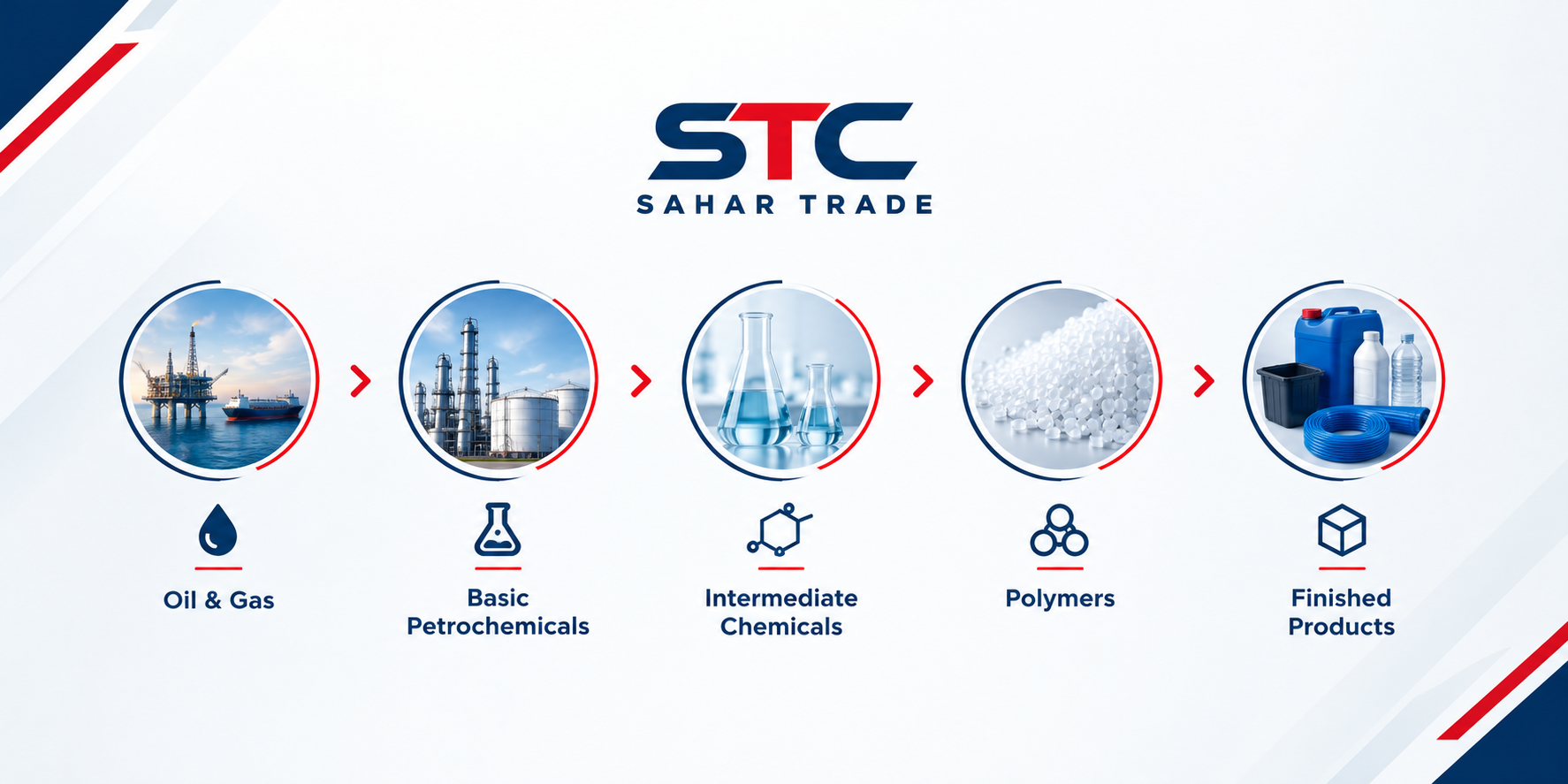
- Petrochemicals: Chemical products and raw materials used in manufacturing, packaging, plastics, and other industries.
Each product has specific technical, commercial, packaging, handling, and transportation requirements. Buyers should confirm the applicable specifications and documentation before agreeing to a transaction.
International energy trade also depends on market conditions, exchange rates, transportation costs, border procedures, and the regulatory requirements of the countries involved.
2. How Does International Energy Trade Work?
Although individual transactions vary, a typical international commodity trade follows several stages.
Step 1: Define buyer requirements. The buyer identifies the required product, grade, quantity, destination, delivery schedule, and applicable specifications.
Step 2: Identify suitable suppliers. Potential suppliers are assessed according to product availability, commercial terms, documentation, and export capability.
Step 3: Verify the product and transaction. Relevant documents may include a product specification sheet, Certificate of Analysis (COA), quotation, and other documents required for the particular shipment.
Step 4: Agree on commercial terms. The parties clarify pricing, payment arrangements, delivery responsibilities, and the applicable Incoterms® rules where relevant.
Step 5: Coordinate logistics. The parties plan transportation, loading, documentation, border procedures, and delivery.
Step 6: Complete delivery and settlement. The shipment is checked against the agreed requirements, and the parties complete the contractual and payment procedures.
Careful coordination at every stage helps reduce misunderstandings, delays, and avoidable commercial risks.
3. Understanding Commodity Trading
Commodity trading is the buying and selling of standardized or specification-based goods. Unlike ordinary retail purchases, commodity transactions often involve substantial quantities, negotiated prices, technical specifications, and complex delivery arrangements.
In energy markets, the commercial value of a product depends on several factors, including grade, quality, origin, quantity, market conditions, and transportation costs.
For example, bitumen grades such as 60/70 and 85/100 have different penetration characteristics and may be suitable for different applications. Similarly, buyers of gasoil must evaluate the actual sulfur content and other relevant parameters rather than relying on a product name alone.
A professional commodity transaction therefore requires clear specifications, transparent documentation, and agreement on what will actually be supplied.
4. What Is Global Sourcing?
Global sourcing is the process of identifying and evaluating suppliers across different countries to obtain suitable products, prices, and commercial terms.
For industrial buyers, global sourcing can create access to alternative supply markets and help diversify procurement options. However, the lowest quoted price does not necessarily represent the best commercial opportunity.
A sourcing evaluation should consider:
- Product specifications and consistency.
- Supplier identity and business credibility.
- Availability, minimum order quantity, and lead time.
- Export capability and required documentation.
- Packaging, loading arrangements, and transportation.
- Total landed cost at the destination.

5. How to Find a Reliable Commodity Supplier
Selecting a reliable supplier is one of the most important decisions in international trade. A supplier should be evaluated using verifiable evidence rather than promotional claims alone.
Start by confirming the company’s legal identity and contact information. Where possible, check its business registration, physical operations, references, and relevant transaction history.
Next, request product-specific documentation. Depending on the commodity, this may include a current COA, technical data sheet, safety documentation, and details about the producer or origin. Verify that the documents relate to the actual product and shipment being offered.
Buyers should also clarify the commercial details in writing. These include quantity, price validity, payment terms, delivery conditions, loading point, shipment schedule, and responsibility for transportation and customs formalities.
Be cautious of unusually low prices, inconsistent documents, pressure to make immediate payments, or reluctance to provide verifiable company information. Independent verification and appropriate contractual safeguards can help manage these risks.
No single document guarantees that a supplier or transaction is risk-free. Supplier assessment should combine document checks, commercial due diligence, and appropriate verification procedures.
6. Why Trade and Logistics Must Work Together
Trade and logistics are closely connected. A commercially attractive product may become uncompetitive when transportation, handling, insurance, border costs, and other applicable expenses are included.
For this reason, buyers should evaluate the total landed cost rather than comparing supplier quotations alone.

For cross-border routes, planning may also require confirmation of vehicle suitability, cargo-handling requirements, border procedures, permits, and shipment documentation. These requirements vary according to the commodity, route, and parties involved and should be verified before loading.
Effective coordination between the buyer, supplier, and logistics providers helps align product availability, loading schedules, transportation arrangements, and delivery expectations.
7. Connecting Energy to Global Markets
International commodity trading requires a combination of product knowledge, supplier evaluation, commercial planning, and logistics coordination. Businesses that approach these elements systematically are better positioned to compare opportunities and make informed sourcing decisions.
SAHAR TRADE (STC) focuses on international B2B trade involving energy products, petroleum products, bitumen, LPG, and petrochemicals, with a focus on Iran, Armenia, and regional markets.
For businesses evaluating supply opportunities, the starting point is clear: define the requirement, verify the product and supplier, review the commercial terms, and assess the logistics before making a commitment.
Looking for information about energy products or international sourcing opportunities?
Contact SAHAR TRADE to discuss your business requirements and request further information.
SAHAR TRADE — CONNECTING ENERGY TO GLOBAL MARKETS.
