
Petrochemicals are an essential part of modern industry. They are used in the production of plastics, packaging, synthetic materials, chemicals, construction products and many other goods used in everyday life.
For businesses involved in international trade and industrial sourcing, understanding petrochemicals is important because these products form a large and diverse global market. Different petrochemical products have different properties, applications, grades, transportation requirements and commercial considerations.
But what exactly are petrochemicals, how are they produced, and what are the main categories?
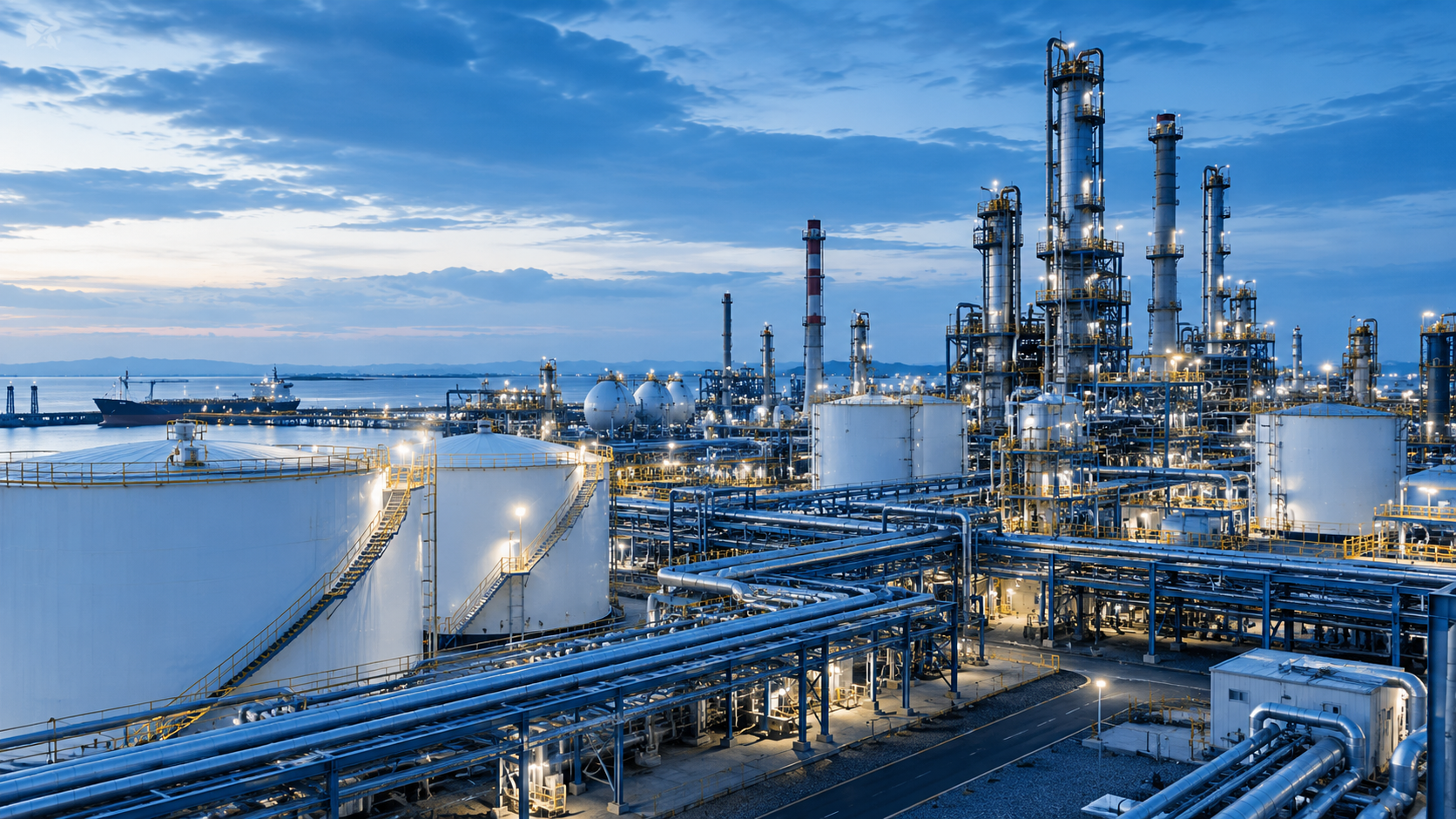
What Are Petrochemicals?
Petrochemicals are chemical products derived primarily from hydrocarbon-based feedstocks such as crude oil and natural gas.
They are not simply petroleum products such as gasoline or diesel. Instead, petrochemicals are used as building blocks or raw materials for manufacturing a wide range of chemical and industrial products.
A simplified petrochemical value chain can be viewed as:
Oil & Gas → Feedstocks → Basic Chemicals → Intermediate Products → Polymers and Materials → Finished Products
This chain can involve many stages, and the final product may be very different from the original hydrocarbon feedstock.
For example, certain petrochemical feedstocks can be processed into ethylene. Ethylene can then be used to produce polyethylene, which is widely used in plastic products and packaging.
This is why petrochemicals are closely connected to many manufacturing industries.
How Are Petrochemicals Produced?
The production process varies depending on the product and the feedstock.
Crude oil and natural gas can be processed to produce different hydrocarbon streams and chemical feedstocks. These feedstocks can then undergo processes such as cracking, reforming, separation and other chemical transformations.
One important group of processes is used to produce basic petrochemical building blocks such as olefins and aromatics.
Examples of important basic petrochemicals include:
- Ethylene
- Propylene
- Butadiene
- Benzene
- Toluene
- Xylene
These chemicals can then be processed further into intermediate chemicals, polymers and other materials.
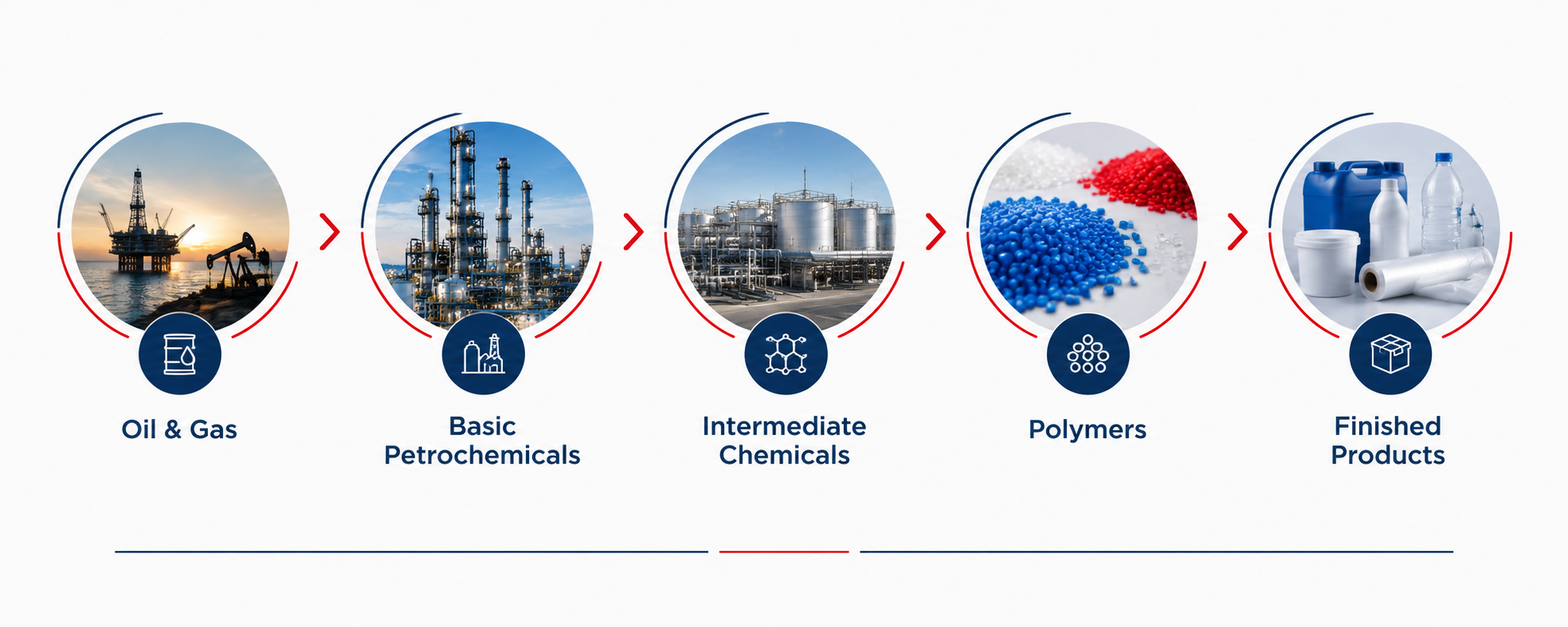
The important point is that petrochemical production is a value chain rather than a single manufacturing process. Different feedstocks, technologies and processing routes can result in different products and grades.
Main Categories of Petrochemical Products
Petrochemicals cover a very broad range of products. Some of the most important categories include basic chemicals, polymers, chemical intermediates and other specialty or industrial chemical products.
1. Olefins
Olefins are among the most important building blocks in the petrochemical industry.
Examples include ethylene and propylene.
They are used as feedstocks for the production of many polymers and chemical products.
For example:
Ethylene → Polyethylene
and:
Propylene → Polypropylene
These polymers are then used in numerous manufacturing applications.
2. Aromatics
Aromatics are another important group of petrochemical products.
Common examples include:
- Benzene
- Toluene
- Xylene
These products can be used as feedstocks or components in the production of chemicals, solvents, resins and other industrial materials.
3. Polymers
Polymers are particularly important in international B2B trade because they are used by manufacturers across many industries.
Examples include:
- Polyethylene (PE)
- Polypropylene (PP)
- Polyvinyl Chloride (PVC)
- Polyethylene Terephthalate (PET)
- Polystyrene (PS)
Polyethylene itself includes different product families such as HDPE, LDPE and LLDPE, each with different characteristics and applications.
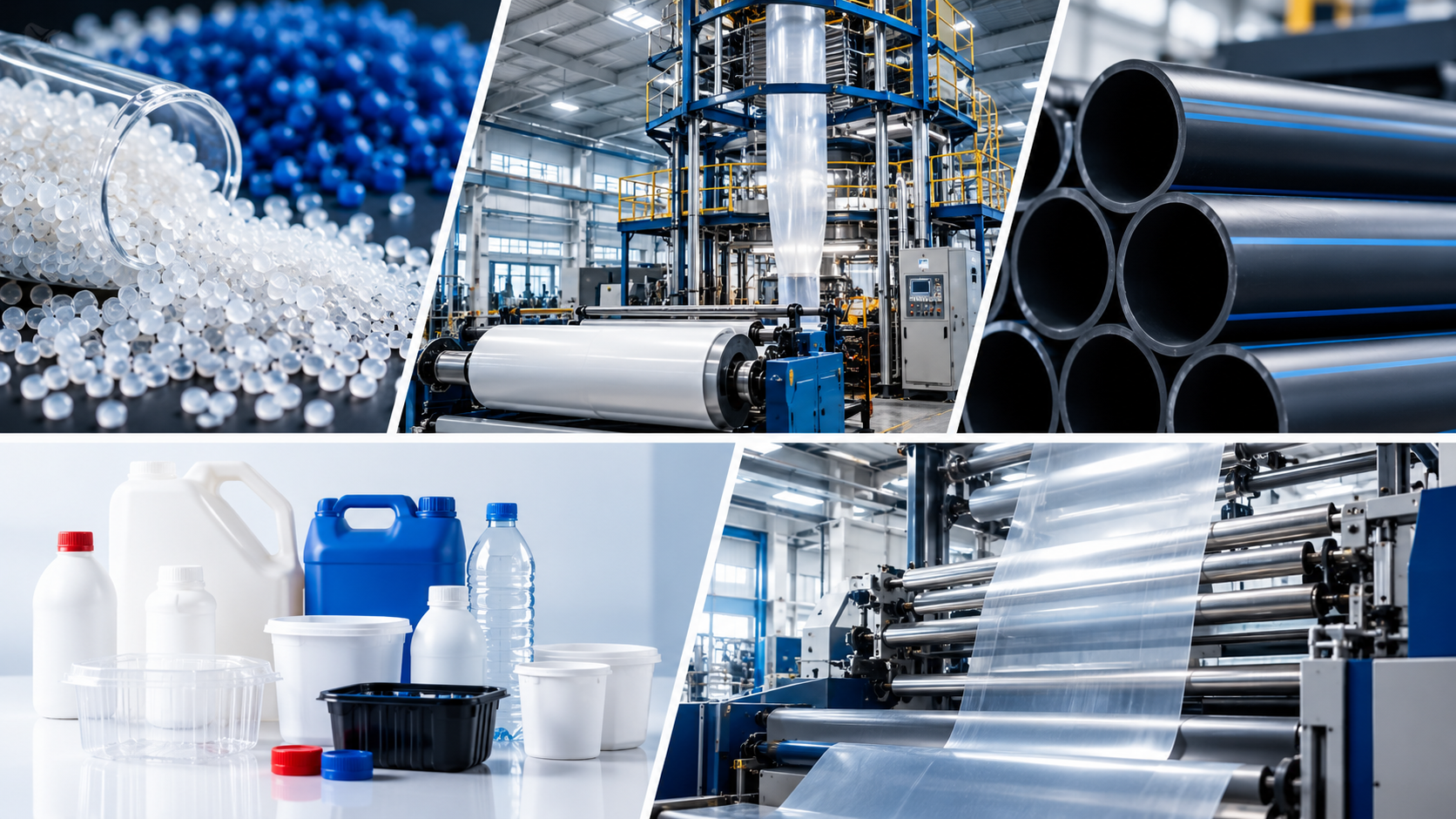
From Petrochemicals to Everyday Products
One of the most interesting aspects of petrochemicals is how far they can move through the industrial value chain.
A petrochemical product may begin as a basic chemical and eventually become part of a finished product used by consumers or industrial customers.
For example:
Ethylene → Polyethylene → Plastic Film → Packaging
Another example can be:
Propylene → Polypropylene → Polymer Products → Industrial or Consumer Applications
PVC can be used in applications such as pipes, construction materials and various plastic products.
This means that petrochemical demand is closely connected to manufacturing, construction, packaging, transportation, consumer products and many other sectors.
Why Product Grade Matters
In petrochemical trading, knowing the product name is often not enough.
A buyer may require a specific grade based on the intended application and manufacturing process.
For polymer products, buyers may consider factors such as:
- Grade
- Application
- Processing method
- Melt flow characteristics
- Density
- Mechanical requirements
- Packaging
- Technical documentation
- Certificate of Analysis (COA)
For this reason, a professional B2B sourcing process should begin with understanding the buyer’s actual technical and commercial requirements.
The same broad product category may contain multiple grades designed for different applications.
Petrochemicals in International Trade
Petrochemical trading involves more than finding a product and a price.
A successful transaction may require coordination between suppliers, buyers, logistics providers and documentation teams.
Important commercial considerations can include:
- Product specification
- Grade
- Origin
- Quantity
- Packaging
- Availability
- Loading location
- Commercial terms
- Required documentation
- Transportation
- Destination requirements
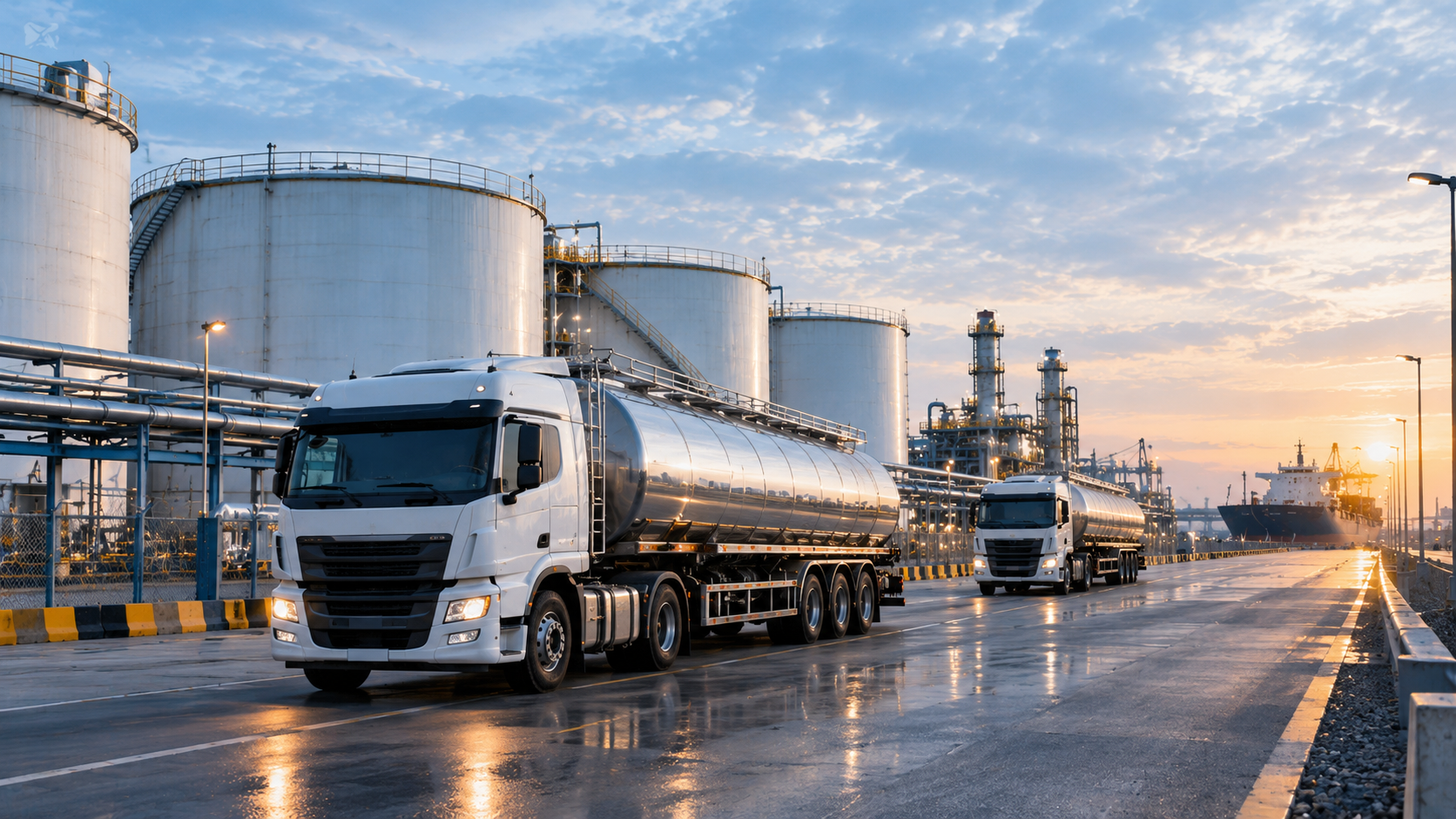
For cross-border trade, logistics can be particularly important. The feasibility of transporting a product depends on its physical characteristics, packaging, regulatory requirements, route and applicable transport rules.
Petrochemicals and Regional Markets
For companies involved in international sourcing, regional markets can create opportunities to connect producers and industrial buyers.
Iran has significant petrochemical production capacity and is geographically positioned near several regional markets. However, the suitability of a specific product for a particular market should always be evaluated based on actual demand, product requirements, supplier availability, logistics and commercial conditions.
For buyers, the key question is not simply:
“Is this product available?”
A more useful question is:
“Is the right product, grade and specification available under commercially and logistically workable conditions?”
This distinction is especially important in B2B petrochemical trading.
Understanding Petrochemicals Before Buying
Whether you are sourcing polyethylene, polypropylene, PVC, methanol or another petrochemical product, a structured approach can help reduce commercial and technical risks.
Start by defining the required product and application.
Then identify the appropriate specification or grade, verify supplier information and technical documentation, evaluate commercial terms, and finally assess logistics and delivery requirements.
A product should be considered commercially ready only when the relevant technical, supplier and logistical information has been verified.
Conclusion
Petrochemicals are a fundamental part of modern industrial supply chains. From basic chemicals and polymers to materials used in packaging, construction and manufacturing, petrochemical products connect the energy industry with a wide range of downstream markets.
For international buyers, understanding the difference between product categories, grades, applications and technical requirements is an important part of making informed sourcing decisions.
At SAHAR TRADE, our focus is on connecting energy and industrial products with regional and international markets through professional B2B sourcing and cross-border trade.
CONNECTING ENERGY TO GLOBAL MARKETS
If you are looking for a specific petrochemical product or grade, contact SAHAR TRADE to discuss your sourcing requirements.
